01
Ready for the elements
From damp trails to changing weather, make thoughtful outdoor preparation part of every journey. Check the official water-protection limits before use.
Power, Protection, and Precision—Engineered to Keep You Safe Anywhere.
Meet the Waterproof Defense Flashlight. Purposeful design, rechargeable convenience, and dependable preparation for wherever life takes you.
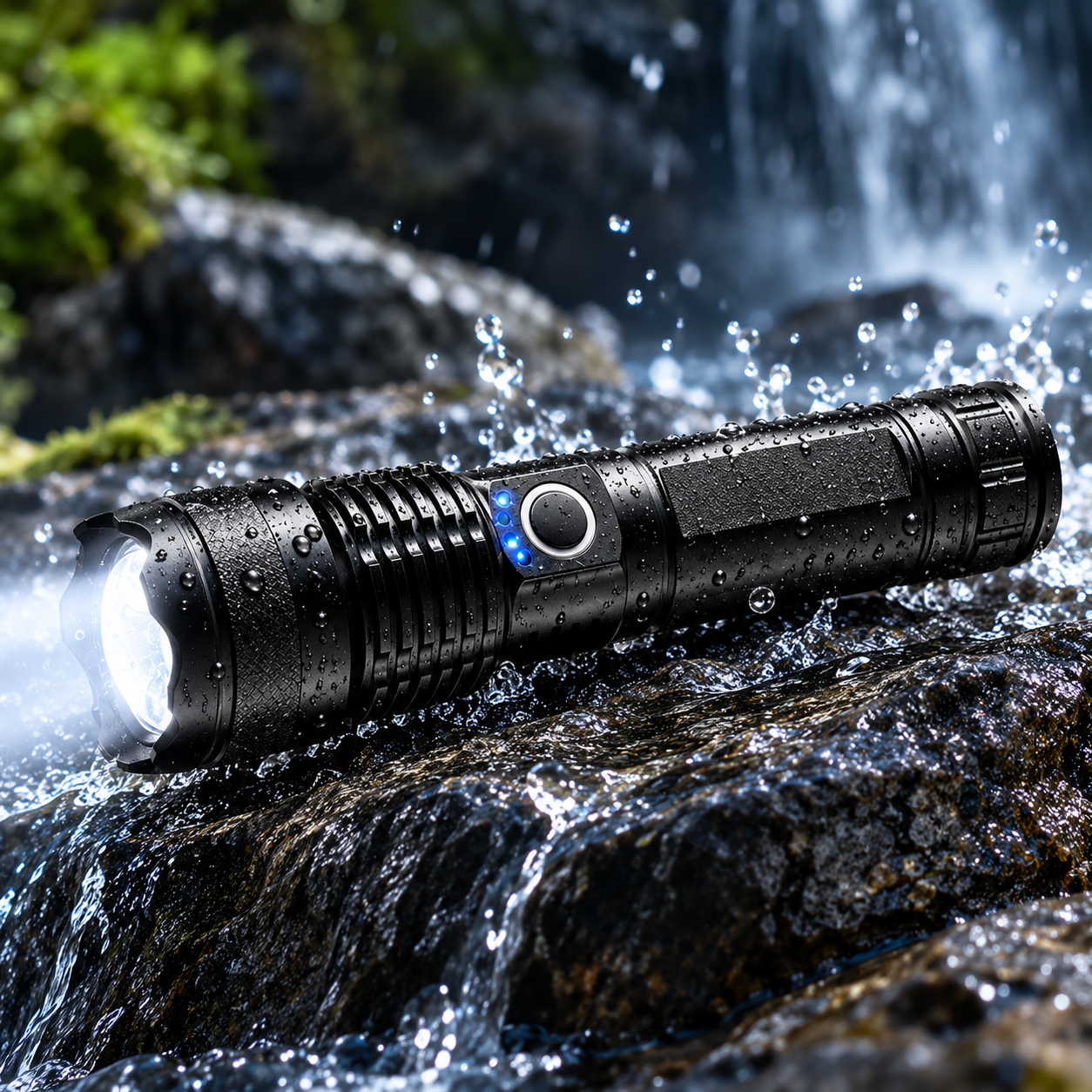
Practical features that put visibility and preparation first. Built around the moments you actually need a light.
From damp trails to changing weather, make thoughtful outdoor preparation part of every journey. Check the official water-protection limits before use.
USB charging fits into your everyday routine. Four blue power indicators offer an at-a-glance reminder to check your charge before heading out.
A textured body, prominent side switch, and defined head give this flashlight a straightforward feel. Get familiar with the controls before you need them.
A flashlight should feel like a useful tool, not another thing to figure out. Discover the visible details behind its rugged, understated design.
Defined grip surfaces and a familiar handheld form.
A prominent side button positioned beside the power display.
Four blue indicators help you remember to check your charge.
Recharge with compatible equipment specified by the manufacturer.
From your front door to the last light on the trail, keep a practical source of illumination close.
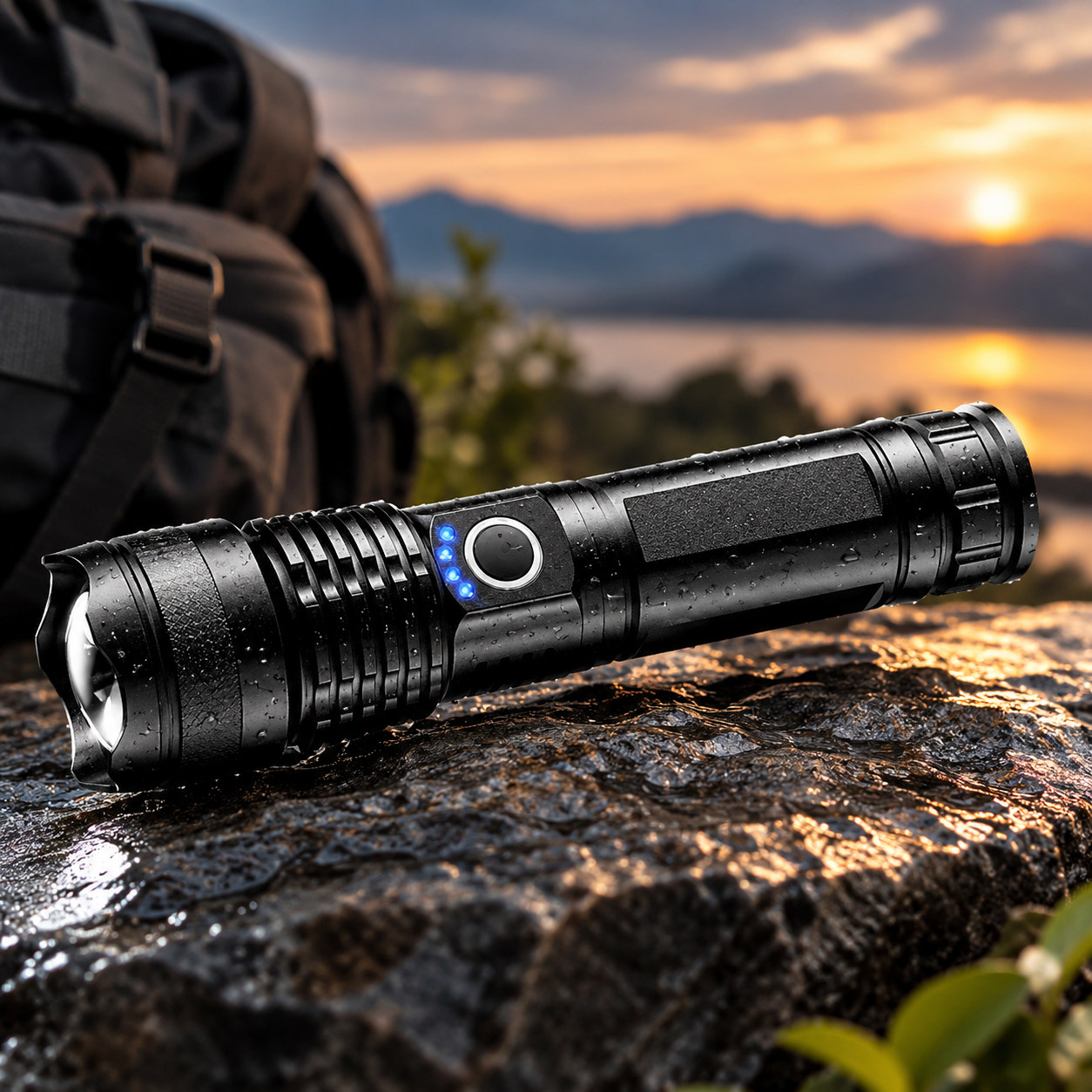
Check your footing, find your gear, and navigate camp after sunset. Pair your light with sensible planning and a backup for longer outings.
Find a dropped key, look into a dim corner, or keep useful light accessible when household power is interrupted.
Give your flashlight a consistent home in your bag or kit. Check its charge before leaving and stay aware of your surroundings.
Useful light starts with a simple habit. Recharge after use, check the blue power indicators, and make sure your flashlight is ready before the next outing.
The supplied graphic shows familiar USB power sources and a four-level charge display. Always follow the model’s charging requirements and keep the port dry.
Read the preparedness guide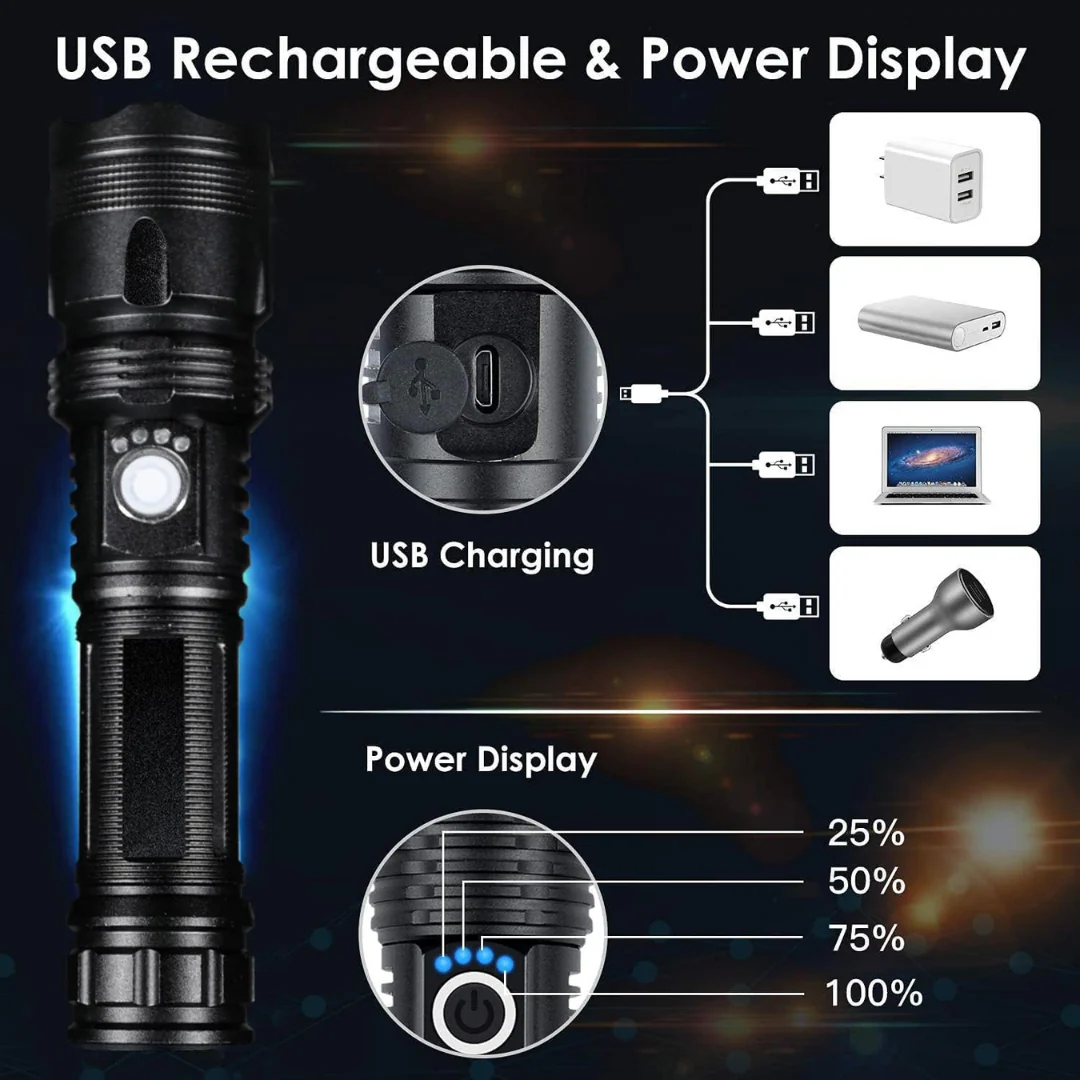
A practical guide to carrying, caring for, and choosing your flashlight. No inflated claims. Just thoughtful habits for life after dark.
A dependable flashlight is one of the simplest additions you can make to an everyday preparedness routine. It helps you read your surroundings when familiar spaces become unfamiliar after dark, spot a change in terrain before taking the next step, and find the small essentials that always seem to disappear at the wrong moment. The Waterproof Defense Flashlight brings that practical purpose into a straightforward handheld design. Its textured body, prominent side control, and visible charge indicators make the essentials easy to identify. Whether you are getting ready for a walk or organizing an emergency kit, useful light belongs within reach rather than at the bottom of a forgotten drawer.
These three ideas work together. Power means having illumination available when you need to see. Protection means taking sensible steps to support your awareness, preparation, and ability to leave an uncomfortable situation. Precision means directing your attention toward the path, object, or task in front of you. A flashlight is not a guarantee of personal safety, and it should never replace good judgment. Instead, think of it as a practical support tool. Use it to inspect a dark entrance, locate a dropped key, or choose a clearer route. The most valuable equipment is equipment that fits naturally into responsible everyday habits.
The supplied product photographs show a cylindrical body with textured grip areas and pronounced rings near the head. These details create a recognizable, practical form rather than an unnecessarily complicated device. A clearly positioned side button gives your thumb an obvious place to go, while the blue indicators sit close enough to check at a glance. Before relying on any flashlight in darkness, spend a little time learning its controls in a comfortable setting. Practice picking it up, finding the switch, and returning it to your chosen storage spot. Familiarity matters more than memorizing a feature list, especially when your attention is divided.
Outdoor plans do not always come with perfect conditions. A trail can become damp, an evening walk can turn rainy, and a campsite can collect moisture long before you notice it. The water-focused product imagery presents this flashlight as an option for those kinds of environments. However, water resistance and waterproofing depend on the exact model, its seals, and the manufacturer’s stated limits. No verified ingress-protection rating or submersion duration is supplied here. Check those specifications on the ordering site before choosing it for demanding wet conditions. Keep the charging cover secure and avoid treating a dramatic product photograph as a substitute for technical instructions.
There is a difference between having a phone with a flashlight and carrying a dedicated light for an outdoor trip. Your phone may already be handling navigation, messages, photographs, and battery-intensive tasks. A separate flashlight lets you keep those responsibilities apart. Use it to examine trail markers, check the ground around a campsite, or locate equipment in a pack. Plan your route and expected return time before leaving, and take additional lighting for longer outings. A handheld light is useful, but some tasks also benefit from hands-free illumination. Build your equipment list around the actual conditions rather than assuming one item can solve every problem.
Not every reason to carry a flashlight involves a remote trail or an emergency. Often, the useful moments are ordinary: checking behind a shelf, finding a pet’s toy under furniture, walking from a parking area, or looking for a switch in an unfamiliar room. A dedicated light is easier to appreciate when it has a regular place in your routine. Store it somewhere accessible, learn how it feels in your hand, and use it for small tasks instead of reserving it for a hypothetical future event. Regular use helps you notice when the battery needs attention and when the lens or body needs cleaning.
The supplied charging graphic shows a USB connection and several familiar power sources, including a wall adapter, portable power bank, laptop, and vehicle adapter. That flexibility makes charging easier to fit into an existing routine. Use the cable and charging equipment specified by the manufacturer, and confirm the required input before connecting accessories. Do not assume that every high-output charger is appropriate simply because the connector fits. Place the flashlight on a stable, dry surface while charging, and avoid charging a wet device. A simple habit of checking and replenishing the battery after use can make the product much more dependable in daily life.
The product reference includes four blue indicator lights associated with 25, 50, 75, and 100 percent power levels. Their purpose is easy to understand: give you a quick visual reminder to think about the remaining charge before you head out. Battery indicators are a guide rather than a promise of a specific runtime. Actual operating time can depend on the selected setting, battery condition, ambient temperature, and how the device is used. Check the official model information for runtime details. For longer trips, plan a compatible charging option or an additional light rather than relying solely on the appearance of a full indicator.
A power outage is easier to manage when basic equipment already has a designated place. Keep a flashlight where household members can find it without searching through several rooms. Pair that habit with an appropriate emergency plan, essential supplies, and a way to receive local guidance. Periodically check the charge and make sure everyone who may need the light knows how to operate it. Think about the route from a bedroom to a hallway or exit, especially if furniture arrangements change. Preparedness does not need to be elaborate to be valuable. Clear storage, familiar controls, and regular checks are often the most effective starting points.
A flashlight can be useful when reading a vehicle manual after dark, finding an item between seats, or inspecting your surroundings before stepping out. If you keep one in a vehicle, consider the manufacturer’s battery storage guidance and the temperatures the interior may reach. Do not leave rechargeable equipment exposed to conditions outside its stated limits. Store it securely so it cannot roll around or interfere with driving, and choose a place that remains easy to access when parked. Roadside situations also require attention to traffic, visibility, and local safety guidance. A flashlight supports those precautions; it does not make an unsafe stopping location safe.
The word defense should be understood in the context of responsible personal preparedness. Light can help you notice your surroundings, identify an obstacle, and decide whether to take another route. Avoid approaching a situation just because you have equipment in your hand. Keeping distance, moving toward a populated area, and contacting appropriate help are usually more important than the tool itself. Never deliberately direct a bright beam into someone’s eyes, toward moving traffic, or at aircraft. This page does not make claims about stopping an attacker or replacing professional safety advice. Choose the flashlight for its practical illumination and use it with consideration for others.
A little maintenance can help you spot problems before they become inconvenient. After outdoor use, inspect the lens, switch area, body, and charging cover for dirt or visible damage. Follow the manufacturer’s cleaning instructions and avoid abrasive cleaners that could affect finishes or seals. If the flashlight becomes wet, dry it thoroughly before opening the charging port or connecting power. Do not disassemble the device unless the official instructions specifically permit it. A damaged cover or seal can change how the device handles moisture, even if it worked well previously. Careful inspection is especially worthwhile before placing it back into an emergency kit.
The best place for a flashlight is a place you can find reliably. That might be an entryway drawer, a dedicated section of an outdoor pack, or a clearly identified compartment in your preparedness kit. Keep it away from excessive heat and follow the battery storage recommendations for periods of non-use. If several people share the device, agree on where it belongs after charging. A consistent location prevents the familiar problem of knowing that you own a useful tool but not knowing where it is. Before a planned trip, check the flashlight early enough to charge it or address a problem without rushing.
Good purchasing decisions depend on clear information. The reference images show the product’s form, the presence of a USB charging port, and a four-level power display. They do not establish a verified lumen rating, beam distance, operating time, weight, impact rating, or battery capacity. Those details can matter, particularly if you are buying equipment for a specific job or environment. Review the current listing and the manufacturer’s instructions rather than relying on assumptions. If a specification is essential to your use, confirm it before ordering. This page intentionally focuses on visible features and practical considerations instead of presenting performance numbers that have not been supplied.
Think about the situations where you actually need illumination. Short household tasks, evening walks, camping trips, and emergency storage each place different demands on a flashlight. Consider how you will carry it, whether you need a free hand, and how often you can recharge it. Compare the official dimensions and weight with your available bag space. If your plans include extended exposure to water, check the exact protection rating. If you need long operating time, look for tested runtime information. Choosing around your real routine is more useful than choosing around a dramatic claim, because practical equipment should make everyday preparation easier rather than more complicated.
Make a short equipment check part of leaving home. Turn the light on, confirm that the switch responds, check the power indicators, and inspect the charging cover. Look at the lens for dirt that might affect visibility and make sure the flashlight is stored where you can retrieve it without unpacking everything. For a longer outing, consider a backup light and a compatible power source. Let someone know your plan when appropriate and account for changing weather or an unexpected delay. These small actions take little time, but they help turn a product you own into equipment you are genuinely ready to use.
When you receive the product, compare it with the current listing and read the included instructions before the first use. Check that the body, lens, controls, and charging cover appear intact. Confirm what accessories are actually included rather than assuming the illustrated charging sources are part of the package. Charge the device as directed and learn its available settings in a safe environment. Keep the product information somewhere you can refer to later, especially the charging and water-exposure guidance. If anything appears damaged or does not operate as described, use the seller’s stated support process instead of attempting an improvised repair.
The Waterproof Defense Flashlight is presented here as a practical companion for people who value visibility, thoughtful preparation, and straightforward equipment. Its dark finish, textured body, USB charging reference, and blue power display support a simple idea: keep useful light close and know how to use it. The next step is to review the current product details at the official ordering destination, confirm that the specifications meet your needs, and make an informed decision. Once it becomes part of your routine, remember that regular charging, careful storage, and responsible use are what turn an everyday tool into something you can confidently reach for.
Get to know the essentials, then check the current product listing for model-specific information.
Visit the ordering siteUse any Order Now button on this page to visit http://defenseflashlight.com. Review the current product listing, available options, shipping information, and seller policies there before placing an order.
A verified IP rating and submersion limit were not supplied with the reference images. Confirm the exact model’s waterproof rating and manufacturer instructions on the ordering site. Keep the charging cover closed, and never charge the device while wet.
The supplied infographic associates the four blue indicators with 25%, 50%, 75%, and 100% charge levels. Use the display as a battery check, not a guaranteed runtime measurement. Consult the product instructions for how the indicators behave during use and charging.
The reference graphic shows USB charging from a wall adapter, power bank, laptop, and vehicle adapter. Confirm the required voltage and compatible cable in the manufacturer’s instructions. The illustration does not establish that these accessories are included.
No. A flashlight supports visibility and awareness. It does not guarantee personal safety or replace route planning, emergency communication, backup lighting, or professional safety advice.
Visit the ordering destination for current model specifications. No verified lumen output, beam distance, battery capacity, or runtime was provided here, so this page does not claim those figures.
Power, Protection, and Precision—Engineered to Keep You Safe Anywhere.
Order Waterproof Defense Flashlight